


Most "best CSS tools" lists were written years ago and never checked again. We went back through the five tools this blog recommended in 2014 and opened every one of them on 11 August 2026. Two of them are gone, one has not shipped a release since December 2016, and two still work fine.
Below is the audit, with screenshots, plus the tools that actually do those jobs now. Every maintenance claim here comes from the npm registry or the live site, so you can check it yourself.
Start Here: Toolz.dev
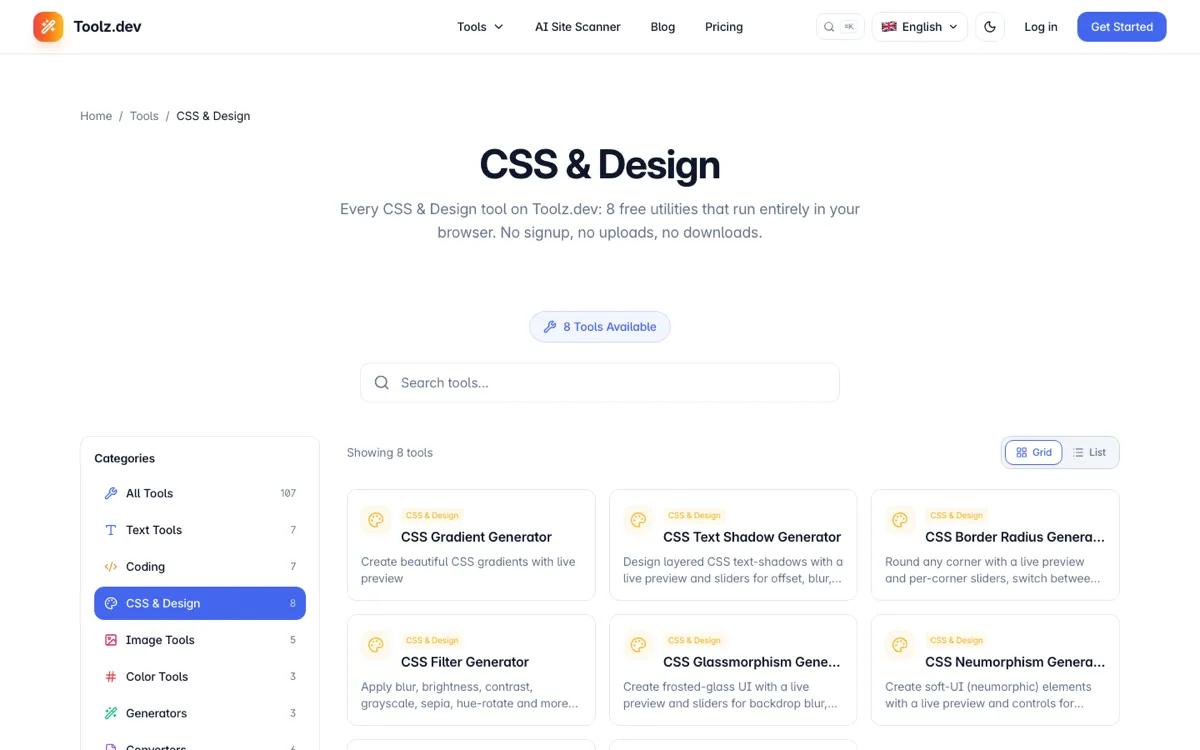
If you want one bookmark instead of ten, Toolz.dev collects 100+ free developer tools in the browser, grouped into categories including CSS & Design, Color Tools, and Minify & Beautify. You do not download or sign up for anything.
The part worth knowing: the tools run in your browser, and the site states that no data leaves your device. Most online CSS formatters POST your stylesheet to a server instead, which is a bad habit when the file you are cleaning belongs to a client.
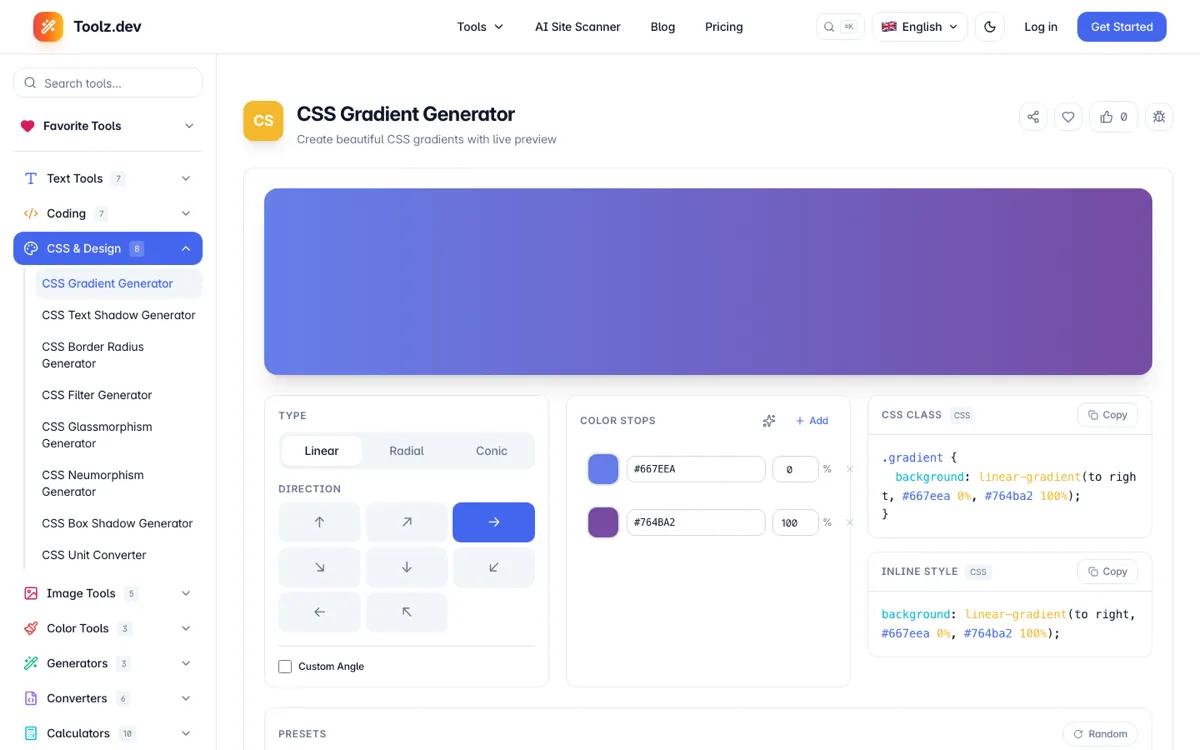
On the CSS side you get a gradient generator, a text shadow generator, and a border radius generator, plus color pickers, palette generation, and a contrast checker for accessibility work. These are the fiddly properties nobody remembers the syntax for, and a visual editor beats guessing at four comma-separated values.
The 2014 List, Re-Tested in 2026
| Tool | Status today | Verdict |
|---|---|---|
| CSS Lint | Site loads | Frozen. Last release 6 Dec 2016 |
| Pure CSS | Moved to pure-css.github.io | Alive, v3.0.0 |
| Dirty Markup | No response | Dead |
| Mailchimp CSS Inliner | Loads, works | Alive |
| FreeFormatter CSS Beautifier | 404 | Page removed |
Checked by loading each URL on 11 August 2026 and cross-referencing the npm registry for release dates.
Still Working
1. CSS Lint (with a warning)
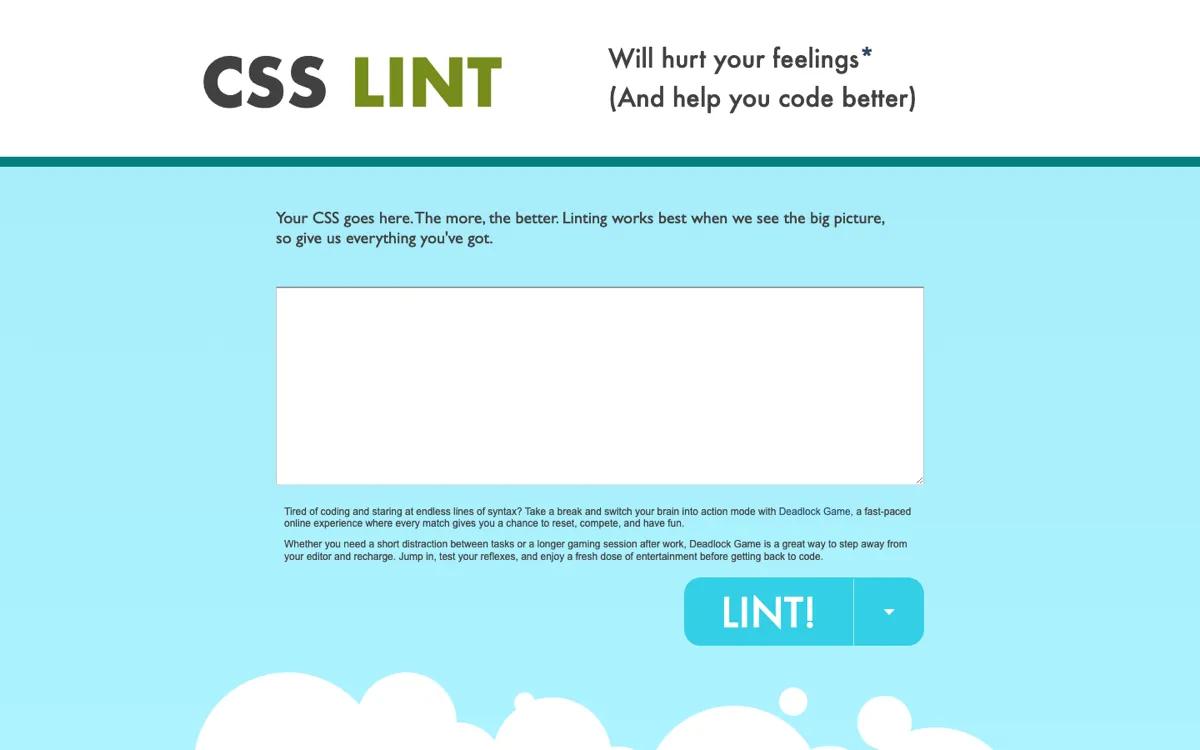
The site still loads and the linter still runs. Paste a stylesheet, hit LINT!, and it flags duplicate properties, empty rules, and selectors that will cost you at render time.
Two things to know before you rely on it. The npm package sits at v1.0.5, published 6 December 2016, so it knows nothing about grid, custom properties, container queries, or anything else CSS has grown in the last decade. And the homepage now carries paragraphs of unrelated affiliate filler about an online game, wedged between the paste box and the lint button, which is what a neglected domain looks like when someone monetizes the traffic.
It is fine for a quick sanity check on an old stylesheet. I would not put it in a build.
2. Pure.css
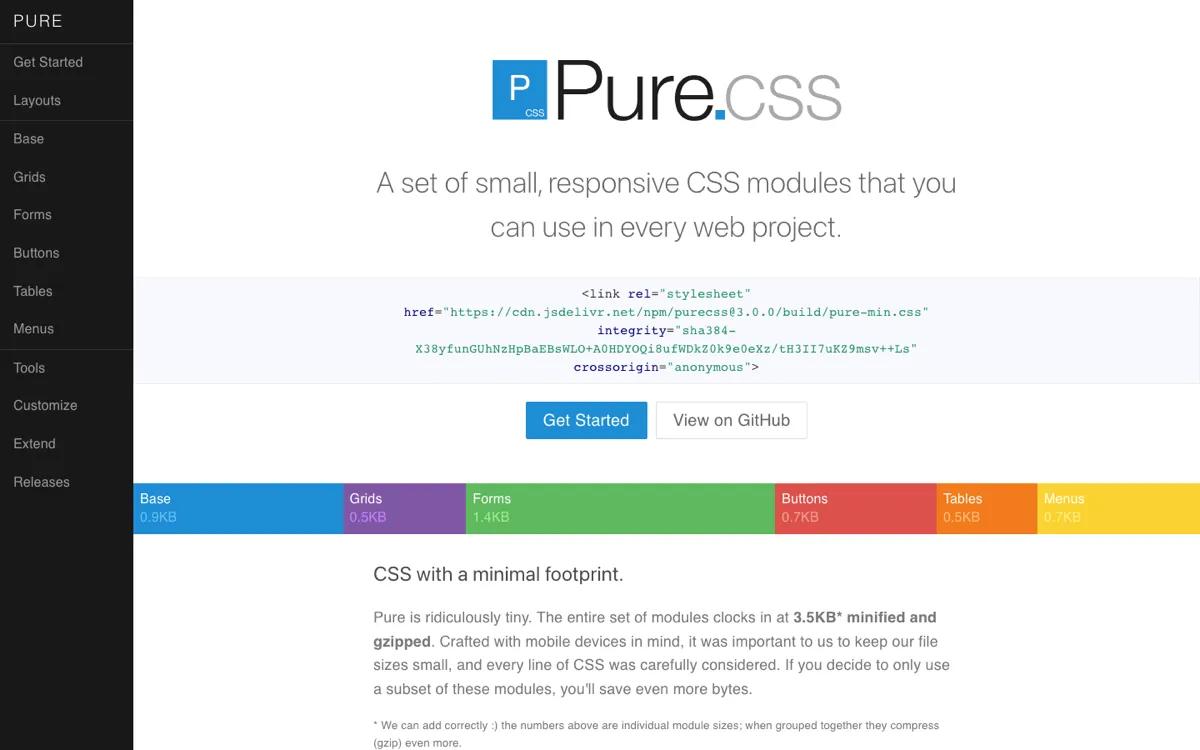
Yahoo's small module set survived the company that made it. The project moved off purecss.io to pure-css.github.io and sits at v3.0.0, with the last npm publish in October 2022.
It is a set of small responsive modules (grids, forms, buttons, tables, menus) that you drop in with one stylesheet link, about 15 KB minified and 3.5 KB gzipped for the base file. There is no build step and no utility class vocabulary to learn, which is the appeal if Tailwind feels like too much machinery for a five-page site.
The trade-off is age. Quiet since 2022 means no container queries, none of the modern color functions, and you own anything that breaks. For a static brochure site that is fine. For a product you will maintain for years, pick something with a pulse.
3. Mailchimp CSS Inliner
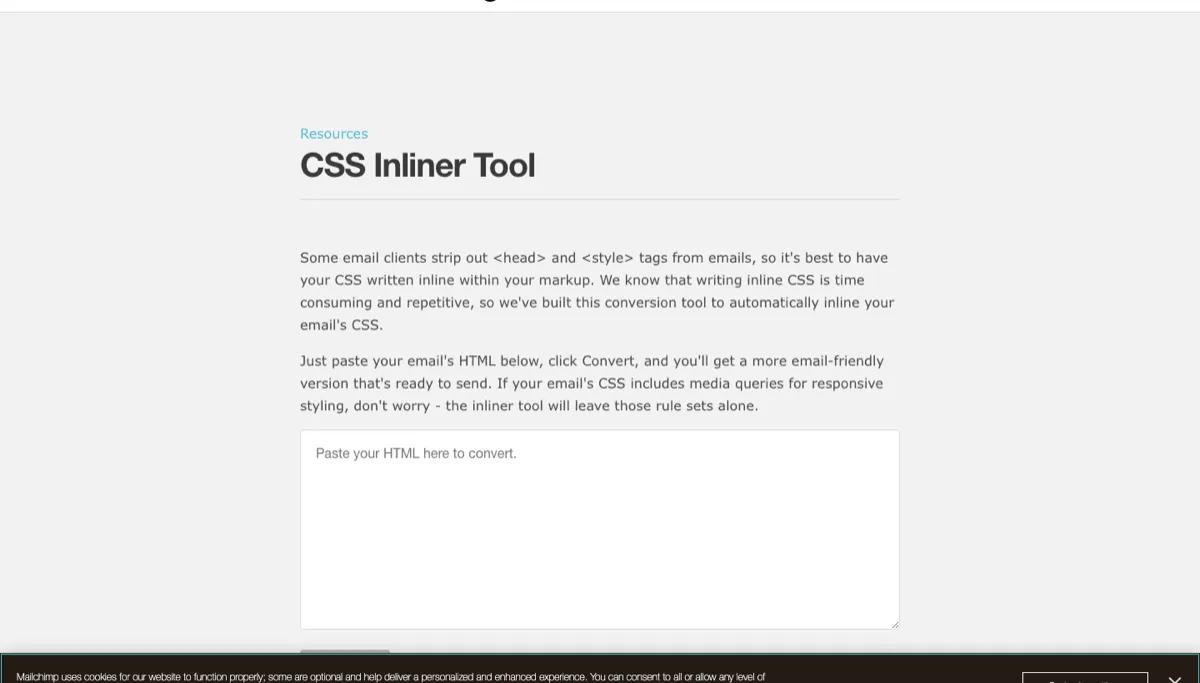
This one is unchanged since 2014, and it still solves its one problem faster than anything else. Email clients strip <head> and <style> blocks, so styles have to live in style="" attributes on the elements themselves. Paste your email HTML, click Convert, get it back inlined.
It leaves media queries alone, which is the detail that makes it usable. Naive inliners flatten responsive rules and hand you an email that looks broken on a phone.
If you send through a modern ESP, check first: most inline CSS automatically on send now, and doing it twice does nothing good.
Gone
Dirty Markup
dirtymarkup.com does not respond at all. It cleaned messy HTML, CSS, and JS in one box and was genuinely good at it. Nothing loads there now, with or without the www prefix.
FreeFormatter CSS Beautifier
The site is alive, the beautifier page is not. The old URL returns a 404. If you have it bookmarked from a 2014 blog post, that is why.
What to Use Instead
4. Stylelint (replaces CSS Lint)
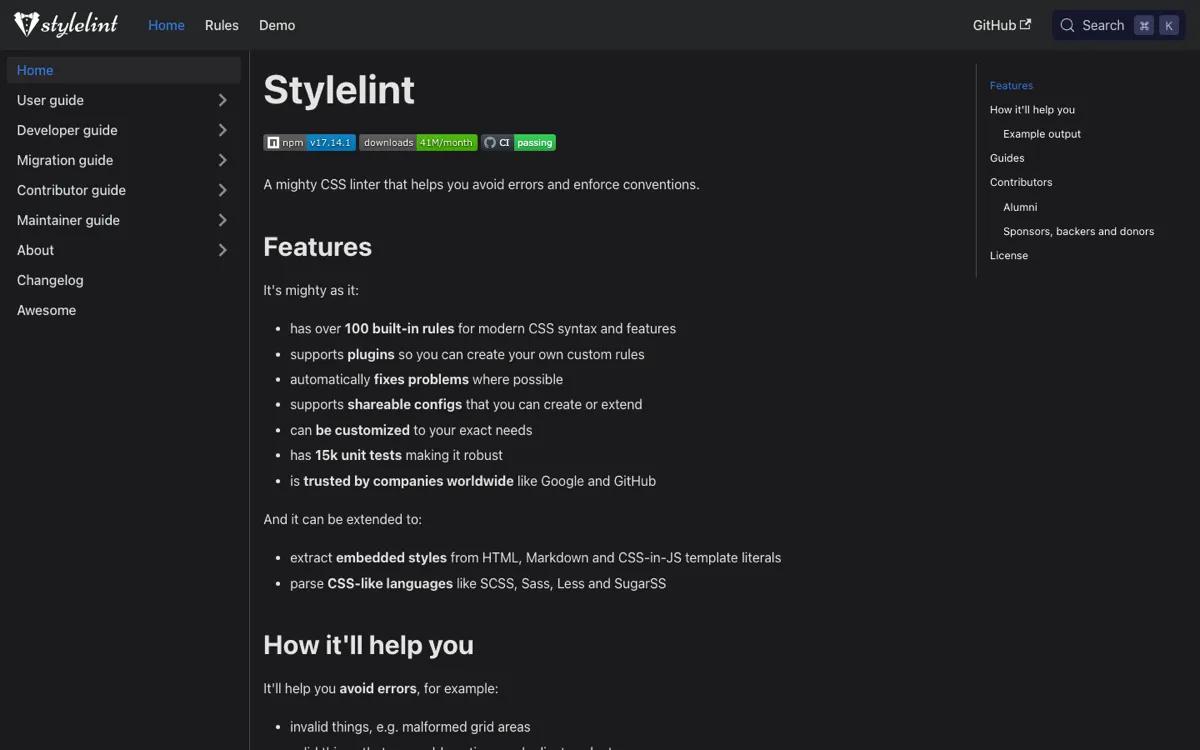
Stylelint is what CSS Lint would be if anyone had kept working on it. Version 17.14.1 shipped 20 July 2026, and it pulls roughly 10.4 million npm downloads a week.
It ships a large built-in rule set, understands modern syntax, and extends to SCSS, Less, and CSS-in-JS. Point it at your stylesheets, extend stylelint-config-standard, and it catches invalid values, duplicate selectors, and inconsistent notation before review does. It runs in CI, in your editor, and on a pre-commit hook.
Worth knowing: it lints, it does not format. Pair it with Prettier, which handles the whitespace argument so your rules do not have to.
5. Beautifier.io (replaces Dirty Markup)
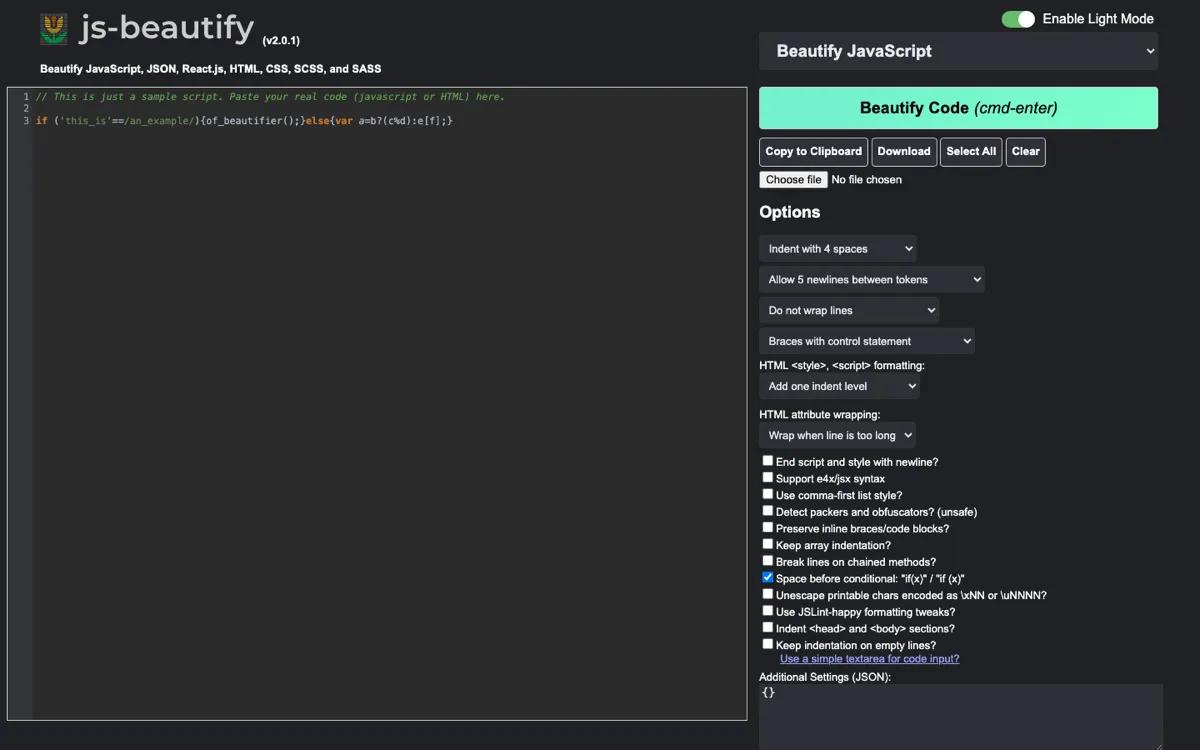
Beautifier.io is the web front end for js-beautify, and it does what Dirty Markup did: paste ugly HTML, CSS, or JavaScript, get it back readable. The underlying package published v2.0.3 on 30 June 2026 and pulls about 10.5 million downloads a week, so the engine behind the paste box is not going anywhere.
Indentation, brace style, and wrap width are all configurable. Reach for it when you have inherited a minified stylesheet with no source map and you need to read it before you can change it.
6. Autoprefixer (nothing in the old list did this)
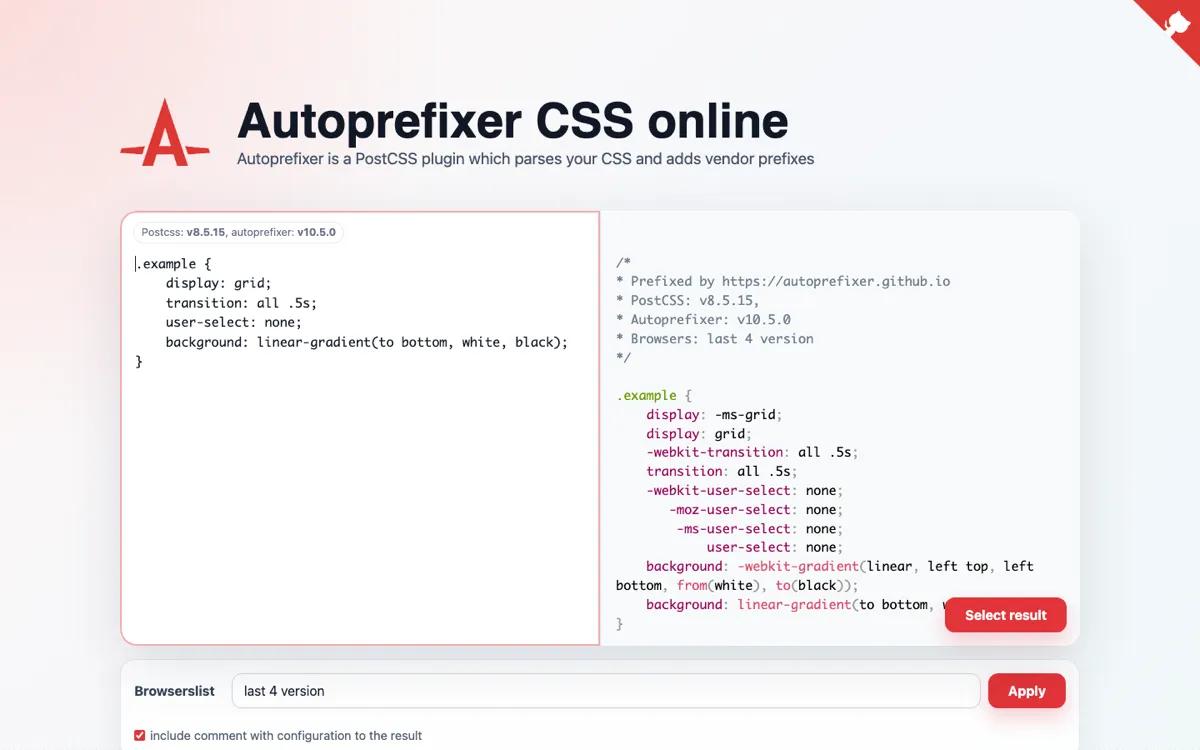
Autoprefixer adds vendor prefixes based on real browser support data rather than on what you remember about 2015. It is a PostCSS plugin with a playground on the site for one-off pastes, at v10.5.4 as of 16 July 2026 and roughly 63.8 million downloads a week, which makes it one of the most-installed packages in front-end tooling.
You need it less than you used to, since most properties worth using are unprefixed now. It earns its place by being the thing that decides that for you, from your browserslist config, instead of you guessing.
7. cssnano (for the build)
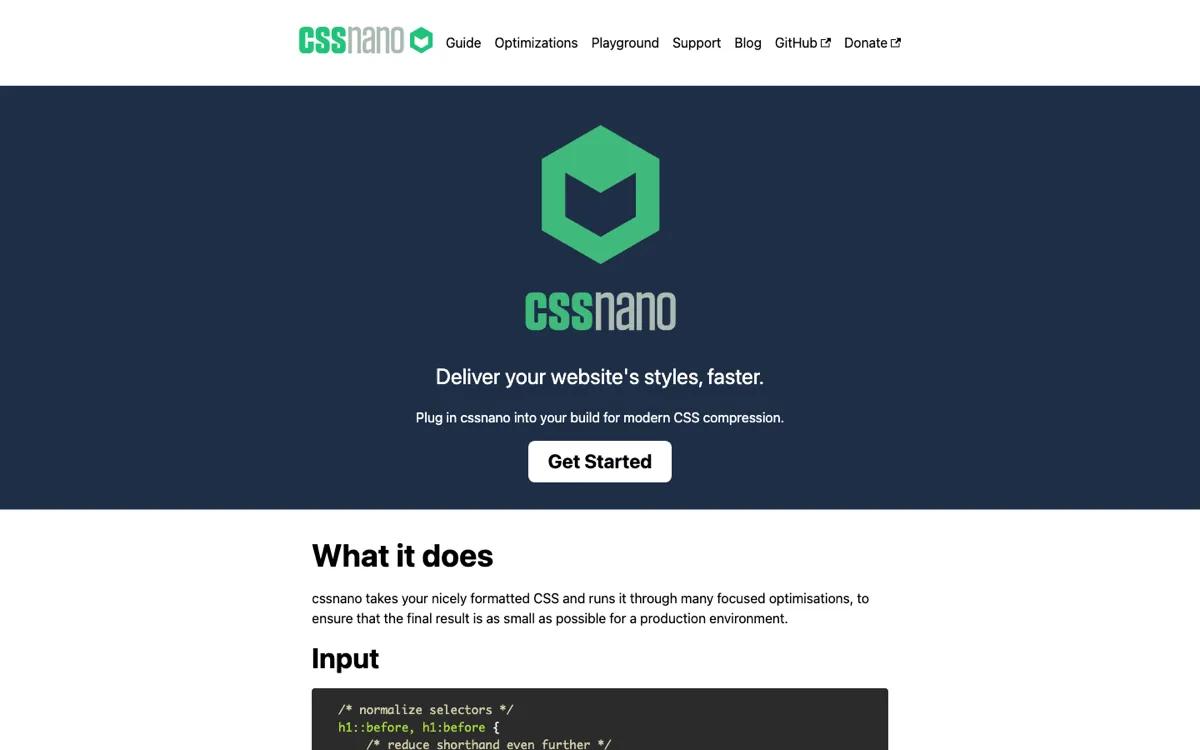
cssnano is the minifier half of the job. It strips whitespace and comments, then goes further: merging rules, reducing color values, and dropping declarations that are overridden later. Version 8.0.5 landed on 9 August 2026 with roughly 18.3 million weekly downloads.
Like Autoprefixer it is a PostCSS plugin, so the two sit in the same pipeline. You read the formatted version while you work and ship the minified one.
Picking the Right One
- Quick visual CSS you cannot remember the syntax for: Toolz.dev generators.
- Catching mistakes in your stylesheets: Stylelint.
- Making inherited or minified CSS readable: Beautifier.io.
- Shipping smaller CSS: cssnano, with Autoprefixer in the same PostCSS chain.
- Email HTML: Mailchimp CSS Inliner, unless your ESP already inlines on send.
- A small site with no build step: Pure.css, knowing it has been quiet since 2022.
Frequently Asked Questions
Is CSS Lint still maintained?
No. The site runs, but the last npm release was v1.0.5 on 6 December 2016. It predates CSS grid, custom properties, and container queries. Use Stylelint for anything current.
What replaced Dirty Markup?
Beautifier.io covers the same ground for HTML, CSS, and JavaScript in one box. Prettier does the same job inside your editor if you would rather not paste code into a website.
Do I still need Autoprefixer in 2026?
Less than you used to, because most CSS worth shipping no longer needs prefixes. It still earns a place in a build because it makes that call from your browserslist config instead of leaving it to memory.
What is the best free CSS formatter?
Beautifier.io for a one-off paste. Prettier if you want formatting to happen automatically on every save and every commit.
Do I have to inline CSS for email?
Some email clients still strip
and